Universities Race to Rewrite Curricula for a World Remade by AI


A high-speed, dynamic visual of a traditional university blueprint or parchment being rapidly overwritten by glowing green and blue AI code, circuit lines, and data streams, symbolizing the frantic pace of curricular redesign in the face of new technology. Image (and typos) generated by Nano Banana.
The educational overhaul: Universities are in a frantic race to adapt their curricula, ensuring their students are equipped for a job market and world fundamentally reshaped by artificial intelligence. Image (and typos) generated by Nano Banana.

Source

ScienceBlog – NeuroEdge

Summary

A new study in Frontiers of Digital Education argues that higher education must fundamentally redesign curricula to keep pace with rapid AI advancement. Led by researchers at Lanzhou Petrochemical University of Vocational Technology, the paper warns that traditional curriculum cycles are too slow for a world where generative AI is already standard in workplaces. It proposes a comprehensive framework built on AI literacy, ethical use, interdisciplinary integration and continuous updating. The authors emphasise a tiered model of AI learning—from core literacy for all students to advanced training for specialists—and call for modular course design, industry partnerships and cultural change within universities. Without sweeping reform, they argue, institutions risk preparing students for a world that no longer exists.

Key Points

  • AI is reshaping what and how universities must teach, creating urgency for reform.
  • Study identifies AI literacy as essential for every student, regardless of discipline.
  • Recommends a tiered AI curriculum: foundational, applied and specialist levels.
  • Calls for modular, continuously updated courses aligned with fast-moving AI developments.
  • Argues for cultural change: interdisciplinary collaboration, new assessment models and faculty training.

Keywords

URL

https://scienceblog.com/neuroedge/2025/11/15/universities-race-to-rewrite-curricula-for-a-world-remade-by-ai/

Summary generated by ChatGPT 5


How AI Adoption May Erode Key Skills US Students Need in an Automated World


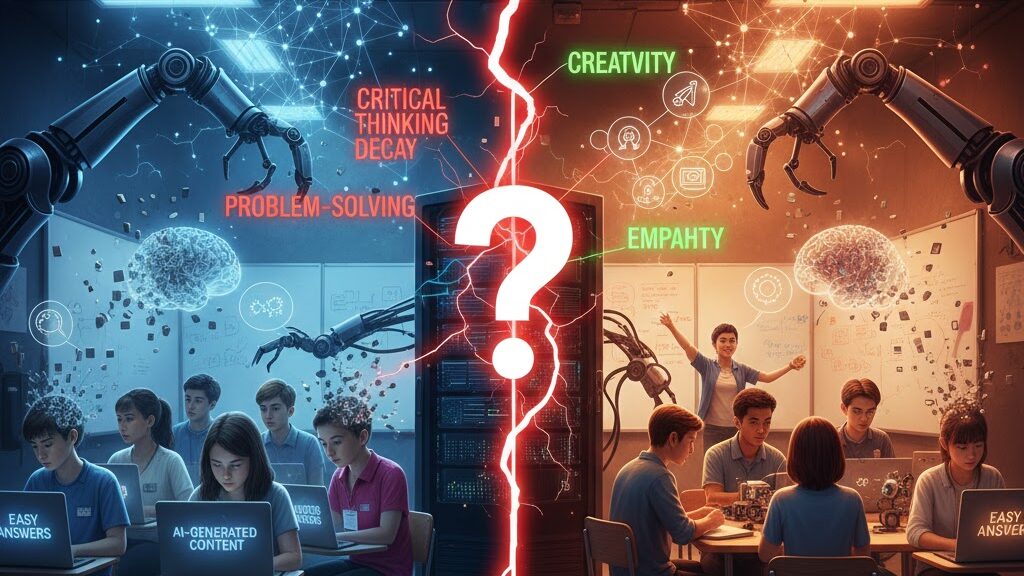
A highly conceptual visual of a digital circuit board with key areas representing skills like "Critical Thinking," "Problem Solving," and "Originality" fading and becoming obscured by an overwhelming cloud of generic, high-speed AI data. Image (and typos) generated by Nano Banana.
The automation paradox: Experts warn that while AI drives efficiency, its widespread adoption in education may inadvertently erode the crucial cognitive and creative skills US students need to thrive in a future dominated by technology. Image (and typos) generated by Nano Banana.

Source

Times of India (Education International Desk)

Summary

This article explores concerns that widespread adoption of AI tools in education may undermine essential skills that students require for long-term success in an increasingly automated world. Educators and analysts interviewed argue that easy access to generative AI for writing, problem solving and research may weaken students’ capacity for critical thinking, creativity and independent judgement. They note that while AI can accelerate tasks, it may also reduce opportunities for deep learning and cognitive struggle, both of which are crucial for intellectual development. The article raises concerns that students who rely heavily on AI may experience diminished confidence in producing original work and solving complex problems without technological support. Experts recommend curriculum renewal that blends responsible AI literacy with explicit instruction in foundational skills, ensuring that students can use AI effectively without sacrificing their broader intellectual growth. The discussion reflects a recurring theme in the global AI-in-education debate: the need to preserve human expertise and cognitive resilience in an era of pervasive automation. The article calls for educators, policymakers and institutions to strike a balance between embracing AI and safeguarding human capabilities.

Key Points

  • Widespread AI use may weaken foundational cognitive skills
  • Risks include reduced independent thinking and reduced confidence
  • Educators call for curriculum redesign with balanced AI integration
  • Highlights need for responsible AI literacy
  • Addresses long-term workforce preparation concerns

Keywords

URL

https://timesofindia.indiatimes.com/education/news/how-ai-adoption-may-erode-key-skills-us-students-need-in-an-automated-world/articleshow/125672541.cms

Summary generated by ChatGPT 5.1


Outsourced Thinking? Experts Consider AI’s Impact on Our Brains


A stylized, conceptual image showing a human head in profile with glowing digital lines extending from the brain area towards a floating, interconnected mesh of AI circuitry, symbolizing the outsourcing of thought processes. A question mark hangs over the point of connection. Image (and typos) generated by Nano Banana.
The cognitive shift: Experts are weighing the potential impact of AI reliance—is it a tool for enhancement, or are we outsourcing the very processes that keep our brains sharp? Image (and typos) generated by Nano Banana.

Source

RTÉ Prime Time

Summary

RTÉ explores emerging concerns about how widespread AI use may alter human cognition. With almost 800 million ChatGPT users globally and Ireland among the world’s heaviest users, scientists warn that convenience may carry hidden cognitive costs. An MIT study using brain-imaging found reduced neural activity when participants relied on ChatGPT, suggesting diminished critical evaluation. Irish neuroscientist Paul Dockree cautions that outsourcing tasks like writing and problem-solving could erode core cognitive skills, similar to over-dependency on GPS. Others draw parallels with aviation, where automation has weakened pilots’ manual skills. While some users praise AI’s benefits, experts warn of a potential “two-tier society” of empowered critical thinkers and those who grow dependent on automated reasoning.

Key Points

  • AI adoption is extremely rapid; Ireland has one of the highest global usage rates.
  • MIT research indicates reduced brain activity when using ChatGPT for problem-solving.
  • Cognitive scientists warn of long-term skill decline if AI replaces active thinking.
  • Automation parallels in aviation show how skills can erode without practice.
  • Public reactions are mixed, reflecting broader uncertainty about AI’s cognitive impact.

Keywords

URL

https://www.rte.ie/news/primetime/2025/1111/1543356-outsourced-thinking-experts-consider-ais-impact-on-our-brains/

Summary generated by ChatGPT 5


We Asked Teachers About Their Experiences With AI in the Classroom — Here’s What They Said


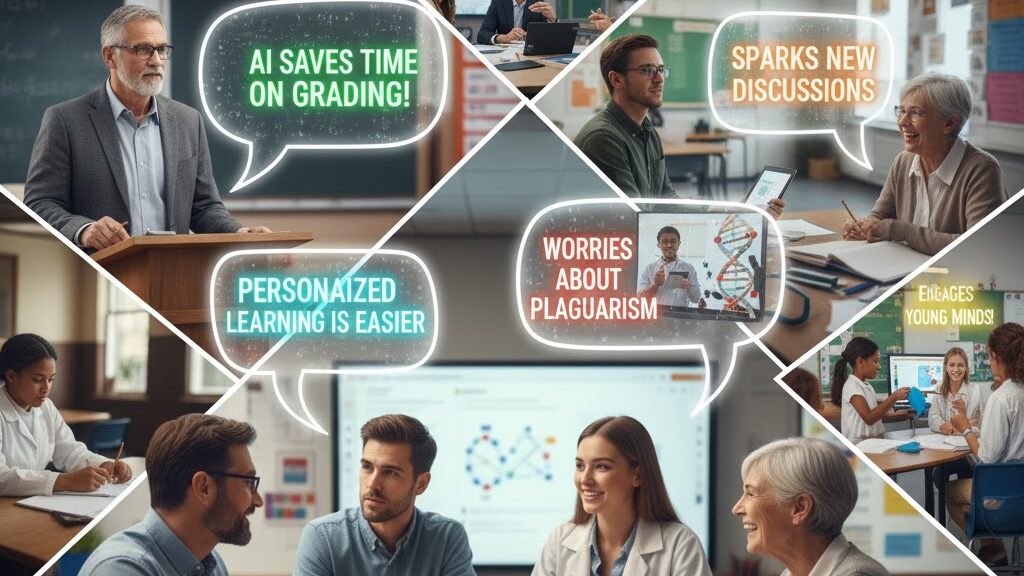
A digital illustration showing a diverse group of teachers sitting around a conference table in a modern classroom, each holding a speech bubble or screen displaying various short, contrasting statements about AI, such as "HELPFUL TOOL," "CHEAT DETECTOR," and "TIME SINK." Image (and typos) generated by Nano Banana.
Diverse perspectives on the digital frontier: Capturing the wide range of experiences and opinions shared by educators as they navigate the benefits and challenges of integrating AI into their classrooms. Image (and typos) generated by Nano Banana.

Source

The Conversation

Summary

Researcher Nadia Delanoy interviewed ten Canadian teachers to explore how generative AI is reshaping K–12 classrooms. The teachers, spanning grades 5–12 across multiple provinces, described mounting pressures to adapt amid ethical uncertainty and emotional strain. Common concerns included the fragility of traditional assessment, inequitable access to AI tools, and rising workloads compounded by inadequate policy support. Many expressed fear that AI could erode the artistry and relational nature of teaching, turning it into a compliance exercise. While acknowledging AI’s potential to enhance workflow, teachers emphasised the need for slower, teacher-led, and ethically grounded implementation that centres humanity and professional judgment.

Key Points

  • Teachers report anxiety over authenticity and fairness in assessment.
  • Equity gaps widen as some students have greater AI access than others.
  • Educators feel policies treat them as implementers, not professionals.
  • AI integration adds to burnout, threatening teacher autonomy.
  • Responsible policy must involve teachers, ethics, and slower adoption.

Keywords

URL

https://theconversation.com/we-asked-teachers-about-their-experiences-with-ai-in-the-classroom-heres-what-they-said-265241

Summary generated by ChatGPT 5


A Way to Save the Essay


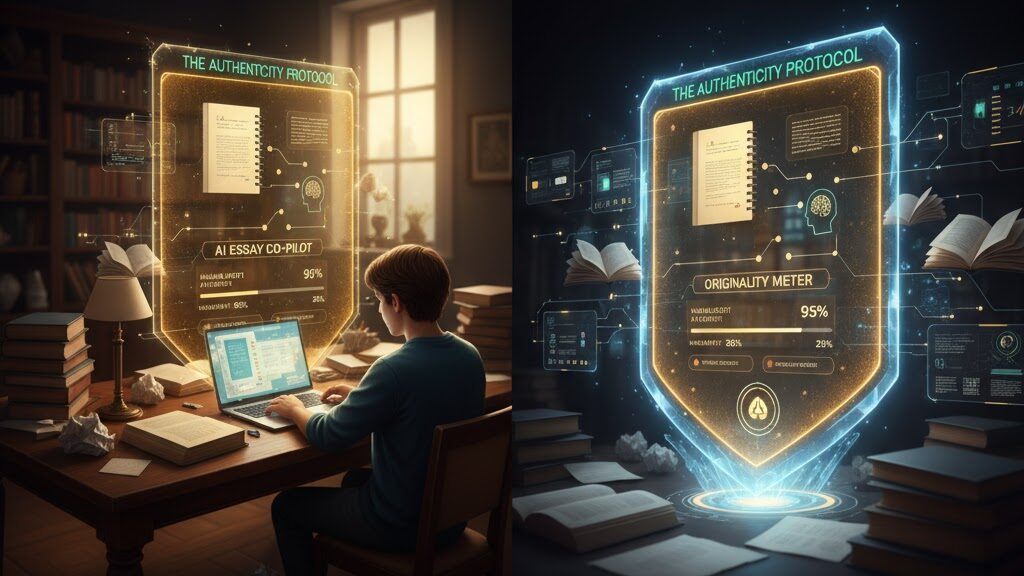
A stylized visual showing a classic, handwritten essay page being protected by a glowing, modern digital shield or frame, symbolizing the integration of new methods to preserve the integrity of traditional writing assignments against AI interference. Image (and typos) generated by Nano Banana.
Rescuing the written word: Exploring innovative teaching and assessment strategies designed to preserve the value and necessity of the traditional essay in the age of generative AI. Image (and typos) generated by Nano Banana.

Source

Inside Higher Ed

Summary

Philosophy instructor Lily Abadal argues that the traditional take-home essay has long been failing as a measure of critical thinking—an issue made undeniable by the rise of generative AI. Instead of abandoning essays altogether, she advocates for “slow-thinking pedagogy”: a semester-long, structured, in-class writing process that replaces rushed, last-minute submissions with deliberate research, annotation, outlining, drafting and revision. Her scaffolded model prioritises depth over content coverage and cultivates intellectual virtues such as patience, humility and resilience. Abadal contends that meaningful writing requires time, struggle and independence—conditions incompatible with AI shortcuts—and calls for designated AI-free spaces where students can practise genuine thinking and writing.

Key Points

  • Traditional take-home essays often reward superficial synthesis rather than deep reasoning.
  • AI exposes existing weaknesses by enabling polished but shallow student work.
  • “Slow-thinking pedagogy” uses structured, in-class writing to rebuild genuine engagement.
  • Scaffolded steps—research, annotation, thesis development, outlining, drafting—promote real understanding.
  • Protecting AI-free spaces supports intellectual virtues essential for authentic learning.

Keywords

URL

https://www.insidehighered.com/opinion/career-advice/teaching/2025/11/07/way-save-essay-opinion

Summary generated by ChatGPT 5