Source
Times of India (Education International Desk)
Summary
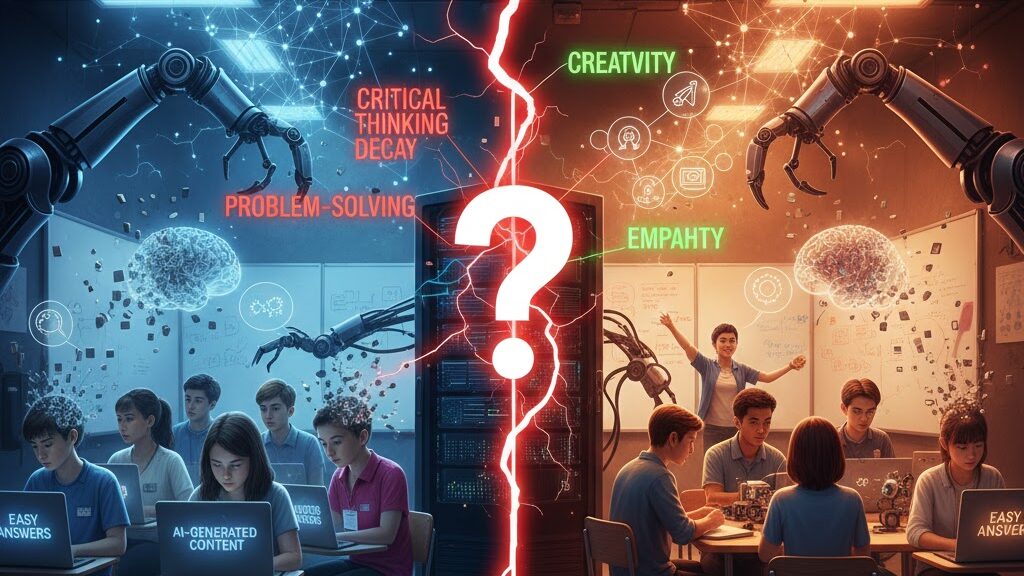
This article explores concerns that widespread adoption of AI tools in education may undermine essential skills that students require for long-term success in an increasingly automated world. Educators and analysts interviewed argue that easy access to generative AI for writing, problem solving and research may weaken students’ capacity for critical thinking, creativity and independent judgement. They note that while AI can accelerate tasks, it may also reduce opportunities for deep learning and cognitive struggle, both of which are crucial for intellectual development. The article raises concerns that students who rely heavily on AI may experience diminished confidence in producing original work and solving complex problems without technological support. Experts recommend curriculum renewal that blends responsible AI literacy with explicit instruction in foundational skills, ensuring that students can use AI effectively without sacrificing their broader intellectual growth. The discussion reflects a recurring theme in the global AI-in-education debate: the need to preserve human expertise and cognitive resilience in an era of pervasive automation. The article calls for educators, policymakers and institutions to strike a balance between embracing AI and safeguarding human capabilities.
Key Points
- Widespread AI use may weaken foundational cognitive skills
- Risks include reduced independent thinking and reduced confidence
- Educators call for curriculum redesign with balanced AI integration
- Highlights need for responsible AI literacy
- Addresses long-term workforce preparation concerns
Keywords
URL
Summary generated by ChatGPT 5.1