Latest Posts

ChatGPT Has Been My Tutor for the Last Year. I Still Have Concerns.


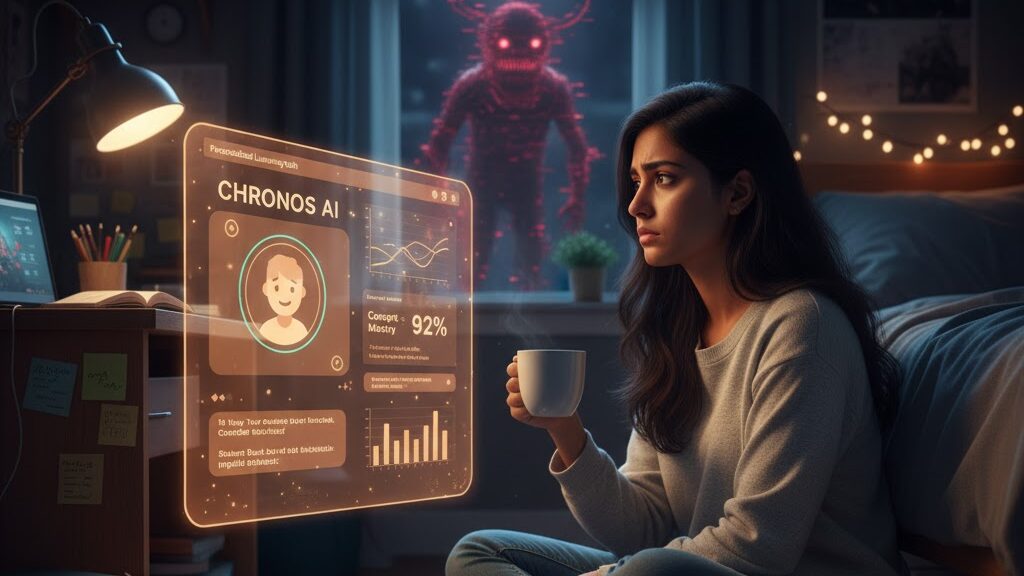
In a cozy, slightly cluttered student bedroom at night, a young female student sits on the floor with her laptop and books, looking pensively at a glowing holographic interface displaying "CHRONOS AI - Your Personal Learning Hub," showing a tutor avatar, progress, and various metrics. In the window behind her, a shadowy, horned monster with red eyes ominously peers in, symbolizing underlying concerns despite the AI's utility. Image (and typos) generated by Nano Banana.
While ChatGPT has served as a personal tutor for many students over the past year, its pervasive integration into learning also brings forth lingering concerns. This image captures a student’s thoughtful yet wary engagement with an AI tutor, visually juxtaposing its apparent utility with an ominous background figure, representing the unresolved anxieties about AI’s deeper implications for education and personal development. Image (and typos) generated by Nano Banana.

Source

The Harvard Crimson

Summary

Harvard student Sandhya Kumar reflects on a year of using ChatGPT as a learning companion, noting both its benefits and the university’s inconsistent response to generative AI. While ChatGPT has become a common study aid for debugging, essay support, and brainstorming, unclear academic guidelines have led to confusion about acceptable use. Some professors ban AI entirely, while others encourage it, leaving students without a shared framework for responsible integration. Kumar argues that rather than restricting AI, universities should teach AI literacy—helping students understand when and how to use these tools thoughtfully to enhance learning, not replace it.

Key Points

  • AI tools like ChatGPT are now embedded in student life and coursework.
  • Harvard’s response to AI use remains fragmented across departments.
  • Students face unclear ethical and authorship boundaries when using AI.
  • The author calls for structured AI literacy education rather than bans.
  • Thoughtful engagement with AI requires defined boundaries and shared guidance.

Keywords

URL

https://www.thecrimson.com/article/2025/10/7/kumar-harvard-chatgpt-tutor/

Summary generated by ChatGPT 5
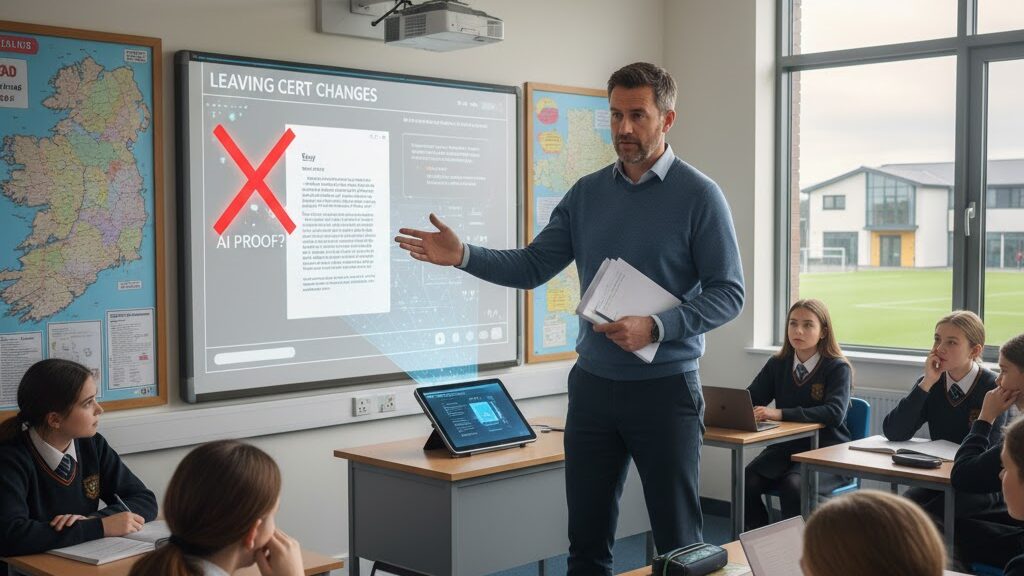

Leaving Cert changes won’t stand up to AI, says Colm O’Rourke


In a modern secondary school classroom, a male teacher stands at the front, holding papers and gesturing towards a large interactive screen. The screen displays "LEAVING CERT CHANGES" with a big red 'X' over a document and the question "AI PROOF?", indicating concerns about the new exam structure's vulnerability to AI. Students in school uniforms are seated at desks, attentively listening. Image (and typos) generated by Nano Banana.
Concerns are mounting that recent changes to the Leaving Certificate examination system may not be robust enough to withstand the challenges posed by artificial intelligence. This image depicts a teacher discussing the new exam structure in a classroom, highlighting anxieties that the updated assessment methods might be susceptible to AI-driven academic dishonesty, compromising the integrity of the crucial final exams. Image (and typos) generated by Nano Banana.

Source

BreakingNews.ie

Summary

Former school principal and columnist Colm O’Rourke has criticised Ireland’s revised Leaving Certificate curriculum, warning that new assessment methods are ill-equipped to withstand the influence of generative AI. The updated curriculum, which allocates 40 % of marks to classroom-based work, was designed to promote continuous assessment but, according to O’Rourke, is now “too easy to cheat.” He argues that the reforms—developed years ago—have already been overtaken by technological change. O’Rourke calls for more in-person, practical, and oral-style assessments to ensure authenticity and to distinguish between genuine learning and AI-assisted shortcuts.

Key Points

  • The new Leaving Cert curriculum allocates 40 % of marks to class-based assessments.
  • O’Rourke warns these assessments are highly vulnerable to AI-assisted cheating.
  • He advocates for oral, practical, and supervised assessment formats instead.
  • The reforms were designed a decade ago and are now outdated by AI’s rapid rise.
  • He argues that genuine knowledge acquisition cannot be replicated by AI tools.

Keywords

URL

https://www.breakingnews.ie/ireland/leaving-cert-changes-wont-stand-up-to-ai-says-colm-orourke-1816115.html

Summary generated by ChatGPT 5


AI in the classroom


In a modern classroom in Pakistan with arched windows, a female professor wearing a hijab stands at the front, gesturing towards a large interactive screen that displays "AI INTEGRATION LAB: UNIVERSITY OF LAHORE" and various AI-related diagrams and Urdu text. Students, both male and female, many wearing hijabs, are seated at desks, actively working on laptops that also show glowing holographic AI interfaces. Image (and typos) generated by Nano Banana.
This image showcases the growing integration of AI in Pakistani classrooms, specifically at the University of Lahore. It depicts a dynamic learning environment where students and educators are actively engaging with artificial intelligence, highlighting the nation’s efforts to adapt its educational system to the demands of a technology-driven future. Image (and typos) generated by Nano Banana.

Source

The News (Pakistan)

Summary

Dr Kashif Salik highlights how artificial intelligence could transform education in Pakistan, especially amid challenges from climate disasters, poor infrastructure, and entrenched inequalities. While AI offers opportunities for resilient and inclusive learning—through online platforms, personalised tutoring, and adaptive instruction—its benefits remain limited by inadequate connectivity, teacher training, and gendered access to technology. The article calls for integrating AI into broader education reform, emphasising digital literacy, climate awareness, and psychological well-being. Salik argues that responsible use of AI can bridge educational gaps and sustain learning during crises, but only if supported by policy, funding, and equitable access.

Key Points

  • AI can improve access to education during crises and support remote learning.
  • Pakistan’s poor infrastructure, low digital literacy, and gender divide hinder adoption.
  • Initiatives like Ataleek and global grants show potential for scalable e-learning.
  • AI could personalise instruction and strengthen resilience in the education system.
  • Reform must combine technology with inclusive, climate-aware education policies.

Keywords

URL

https://www.thenews.com.pk/latest/1349148-ai-in-the-classroom

Summary generated by ChatGPT 5


AI Literacy Is Just Digital and Media Literacy in Disguise


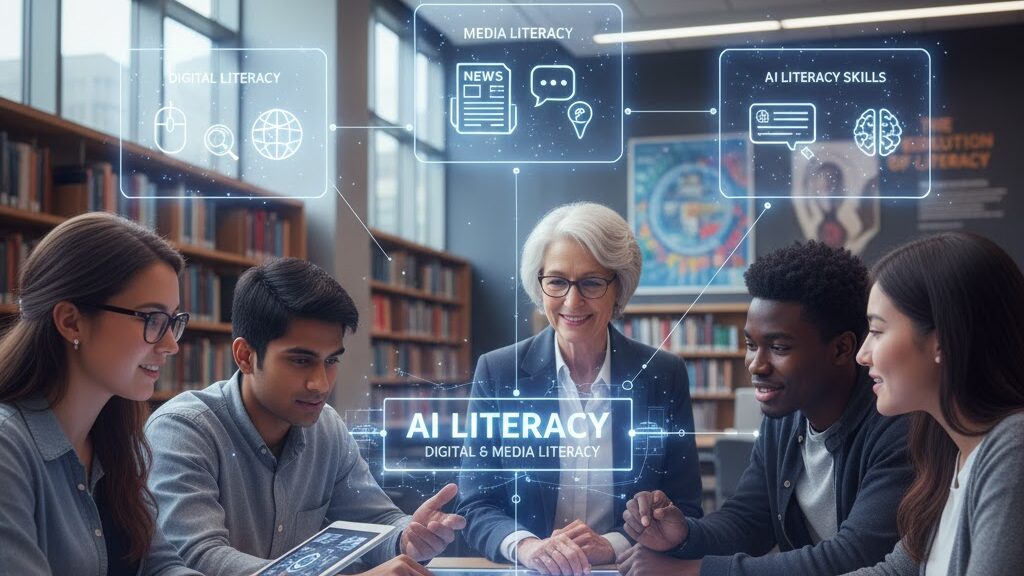
In a modern library setting, a diverse group of four students and a female professor are gathered around a glowing, interactive table displaying "AI LITERACY: DIGITAL & MEDIA LITERACY." Overhead, a holographic overlay connects "DIGITAL LITERACY," "MEDIA LITERACY" (with news icons), and "AI LITERACY SKILLS" (with brain and circuit icons), illustrating the interconnectedness of these competencies. Image (and typos) generated by Nano Banana.
This image visually argues that AI literacy is not an entirely new concept but rather an evolution or “disguise” of existing digital and media literacy skills. It highlights the interconnectedness of understanding digital tools, critically evaluating information, and navigating algorithmic influences, suggesting that foundational literacies provide a strong basis for comprehending and engaging with artificial intelligence effectively. Image (and typos) generated by Nano Banana.

Source

Psychology Today

Summary

Diana E. Graber argues that “AI literacy” is not a new concept but a continuation of long-standing digital and media literacy principles. Triggered by the April 2025 executive order Advancing Artificial Intelligence Education for American Youth, the sudden focus on AI education highlights skills schools should have been teaching all along—critical thinking, ethical awareness, and responsible participation online. Graber outlines seven core areas where digital and media literacy underpin AI understanding, including misinformation, digital citizenship, privacy, and visual literacy. She warns that without these foundations, students face growing risks such as deepfake abuse, data exploitation, and online manipulation.

Key Points

  • AI literacy builds directly on digital and media literacy foundations.
  • An executive order has made AI education a US national priority.
  • Core literacies—critical thinking, ethics, and responsibility—are vital for safe AI use.
  • Key topics include misinformation, cyberbullying, privacy, and online safety.
  • The article urges sustained digital education rather than reactionary AI hype.

Keywords

URL

https://www.psychologytoday.com/us/blog/raising-humans-in-a-digital-world/202510/ai-literacy-is-just-digital-and-media-literacy-in

Summary generated by ChatGPT 5


Admissions Essays Written by AI Are Generic and Easy to Spot


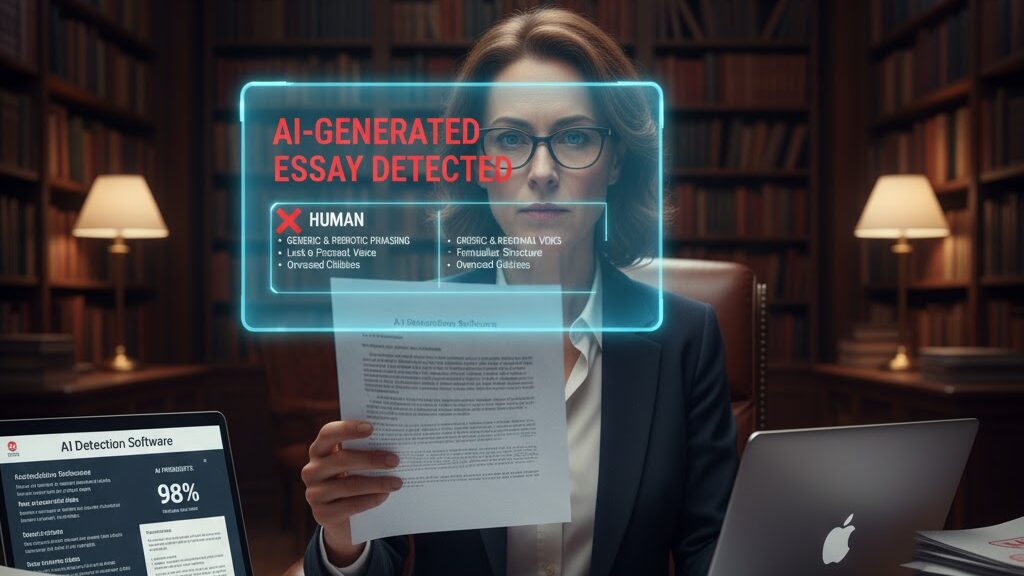
In a grand, wood-paneled library office, a serious female admissions officer in glasses sits at a desk piled with papers and laptops. A prominent holographic alert floats in front of her, reading "AI-GENERATED ESSAY DETECTED" in red. Below it, a comparison lists characteristics of "HUMAN" writing (e.g., unique voice) versus generic AI traits. One laptop screen displays "AI Detection Software" with a high probability score. Image (and typos) generated by Nano Banana.
Despite sophisticated AI capabilities, admissions essays generated by artificial intelligence are often characterised by generic phrasing and a distinct lack of personal voice, making them relatively easy to spot. This image depicts an admissions officer using AI detection software and her own critical judgment to identify an AI-generated essay, underscoring the challenges and tools in maintaining authenticity in student applications. Image (and typos) generated by Nano Banana.

Source

Inside Higher Ed

Summary

Cornell University researchers have found that AI-generated college admission essays are noticeably generic and easily distinguished from human writing. In a study comparing 30,000 human-written essays with AI-generated versions, the latter often failed to convey authentic personal narratives. When researchers added personal details for context, AI tools tended to overemphasise keywords, producing essays that sounded even more mechanical. While the study’s authors note that AI can be helpful for editing and feedback, they warn against using it to produce full drafts. The team also developed a detection model that could identify AI-generated essays with near-perfect accuracy.

Key Points

  • Cornell researchers compared AI and human-written college admission essays.
  • AI-generated essays lacked authenticity and were easily recognised.
  • Adding personal traits often made AI writing sound more artificial.
  • AI can provide useful feedback for weaker writers but not full essays.
  • A detection model identified AI-written essays with high accuracy.

Keywords

URL

https://www.insidehighered.com/news/quick-takes/2025/10/06/admissions-essays-written-ai-are-generic-and-easy-spot

Summary generated by ChatGPT 5