Source
The Irish Times
Summary
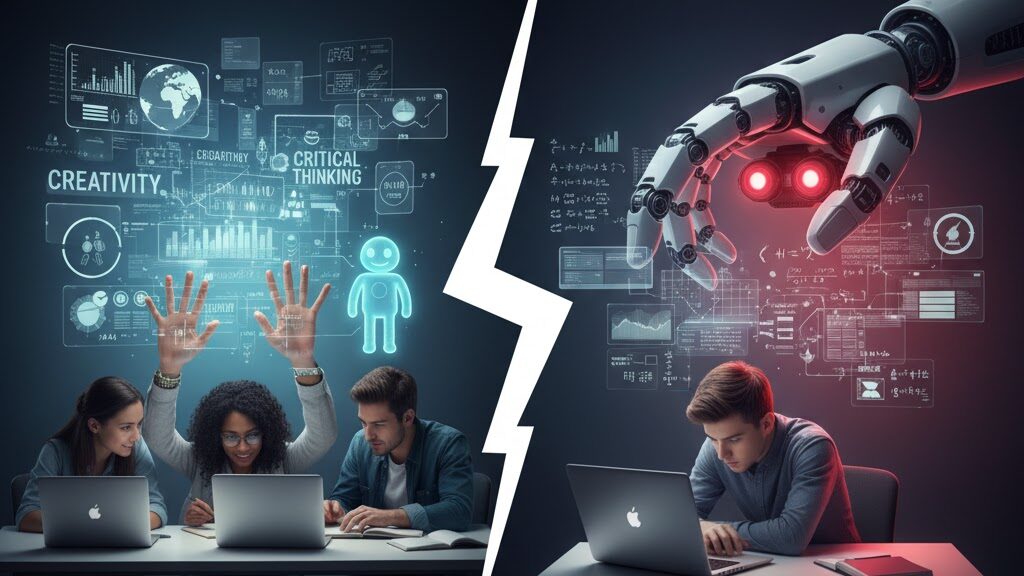
Jean Noonan reflects on the dual role of artificial intelligence in higher education—its capacity to empower learning and its risk of eroding fundamental human skills. As AI becomes embedded in teaching, research, and assessment, universities must balance innovation with integrity. AI literacy, she argues, extends beyond technical skills to include ethics, empathy, and critical reasoning. While AI enhances accessibility and personalised learning, over-reliance may weaken originality and authorship. Noonan calls for assessment redesigns that integrate AI responsibly, enabling students to learn with AI rather than be replaced by it. Collaboration between academia, industry, and policymakers is essential to ensure education cultivates judgment, creativity, and moral awareness. Echoing Orwell’s warning in 1984, she concludes that AI should enhance, not diminish, the intellectual and linguistic richness that defines human learning.
Key Points
- AI literacy must combine technical understanding with ethics, empathy, and reflection.
- Universities are rapidly adopting AI but risk outsourcing creativity and independent thought.
- Over-reliance on AI tools can blur authorship and weaken critical engagement.
- Assessment design should promote ethical AI use and active, independent learning.
- Collaboration between universities and industry can align innovation with responsible practice.
- Education must ensure AI empowers rather than replaces essential human skills.
Keywords
URL
Summary generated by ChatGPT 5