AI Won’t Replace Teachers—but Teachers Who Use AI Will Change Teaching


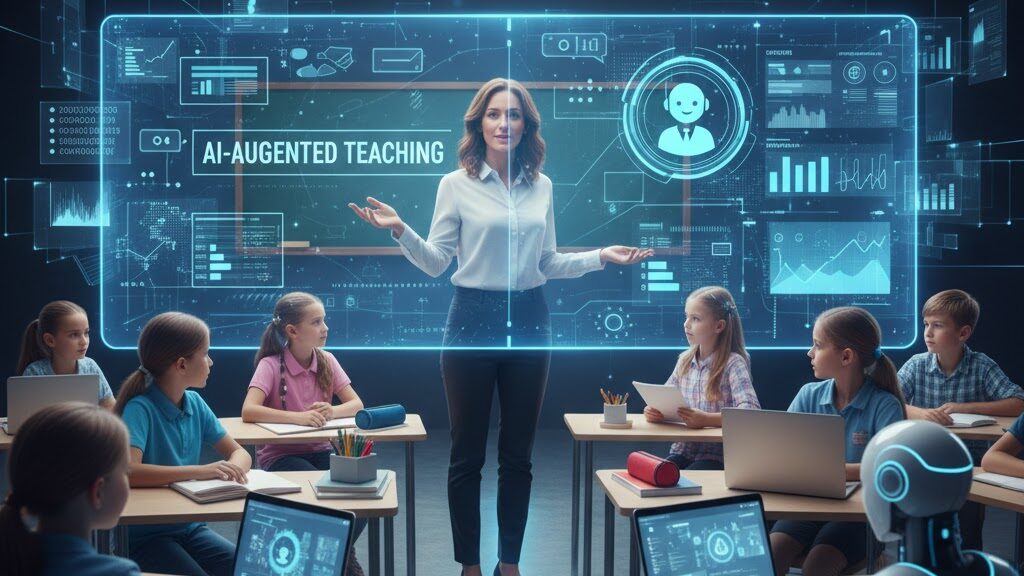
A female teacher stands confidently at the front of a modern classroom, gesturing towards a large, glowing holographic screen behind her that displays "AI-AUGMENTED TEACHING" along with various educational data, student profiles, and analytical charts. Rows of elementary school students are seated at desks, each engaged with a laptop. In the foreground to the right, a sleek, white humanoid robot is also seated at a desk, looking towards the teacher, symbolizing AI as a supportive tool rather than a replacement. The classroom is neat and well-lit. Image (and typos) generated by Nano Banana.
While the fear of AI replacing educators is prevalent, the reality is more nuanced: AI is set to empower teachers. This image illustrates how educators who embrace and integrate AI tools will fundamentally transform teaching methodologies, enhancing learning experiences rather than being superseded by technology. Image (and typos) generated by Nano Banana.

Source

Education Week

Summary

Ingrid Guerra-López argues that artificial intelligence will not replace teachers but will transform how they teach, provided educators engage with the technology thoughtfully and ethically. While AI can automate lesson planning, grading, and data organisation, Guerra-López emphasises that these efficiencies should enhance—not replace—teachers’ human judgment, empathy, and creativity. Drawing on research from RAND and the National Center for Education Statistics, she notes that teachers spend nearly ten hours a week on planning and administrative work—time AI could help recover for more meaningful teaching. However, without proper preparation and professional development, AI risks becoming another underused classroom innovation. Guerra-López calls for investment in AI literacy within teacher training and ongoing professional learning communities to ensure technology integration supports instructional quality and student engagement.

Key Points

  • AI can streamline routine teaching tasks, freeing time for deeper instructional work.
  • Educators remain essential for providing human connection, judgment, and mentorship.
  • Teacher-preparation programmes must include AI training and reflective practice.
  • Schools should create professional learning networks to support responsible AI use.
  • The goal is not to outsource thinking to AI but to use it as a scaffold for learning.
  • Failing to adapt risks both inefficiency and missed opportunities for innovation.

Keywords

URL

https://www.edweek.org/technology/opinion-ai-wont-replace-teachers-but-teachers-who-use-ai-will-change-teaching/2025/10

Summary generated by ChatGPT 5


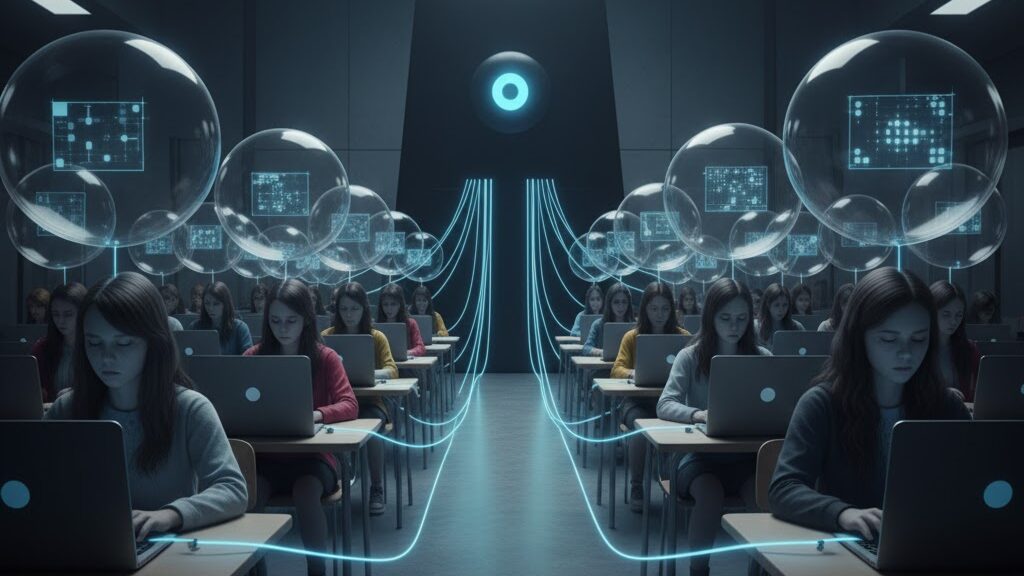
AI in School Affects Pupils’ Ability to Create Original Work, Report Finds


A dimly lit, futuristic classroom with rows of young students, predominantly girls, seated at individual desks, each intensely focused on an open laptop. Above each student's head, a clear, transparent bubble contains glowing digital circuitry and data, symbolizing ideas or creativity. These bubbles are connected by glowing blue lines that lead back to a large, imposing, glowing blue eye or orb on a dark monolith at the front of the classroom, suggesting a central AI influence. The students appear subdued and uniform. Image (and typos) generated by Nano Banana.
A concerning new report indicates that the increasing integration of AI in schools may be diminishing students’ capacity for original thought and creative work. This image visualizes the potential impact, raising questions about how technology might inadvertently hinder the development of essential human skills. Image (and typos) generated by Nano Banana.

Source

The Stage

Summary

A new Oxford University Press report warns that secondary school students in the UK fear artificial intelligence is limiting their creativity and originality. The study found that 80 per cent of pupils aged 13 to 18 use AI regularly for schoolwork, and while 90 per cent said it has helped them develop at least one skill, many expressed concern that it encourages imitation rather than innovation. Sixty per cent reported that AI makes them more likely to copy existing content, while 12 per cent said it hinders creative thinking and writing. Over half also feared AI tools reinforce biased or inaccurate stereotypes. The Writers’ Guild of Great Britain has called on schools and government to protect young people’s creative development and critical independence in the classroom.

Key Points

  • 80 per cent of pupils regularly use AI for schoolwork; only 2 per cent have never used it.
  • 60 per cent say AI encourages imitation and reduces originality.
  • 12 per cent believe AI negatively affects their creative thinking and writing.
  • 51 per cent worry AI tools reinforce bias and untrue stereotypes.
  • The Writers’ Guild urges policies to safeguard creativity and human-centred learning.

Keywords

URL

https://www.thestage.co.uk/news/ai-in-school-affects-pupils-ability-to-create-original-work-report

Summary generated by ChatGPT 5


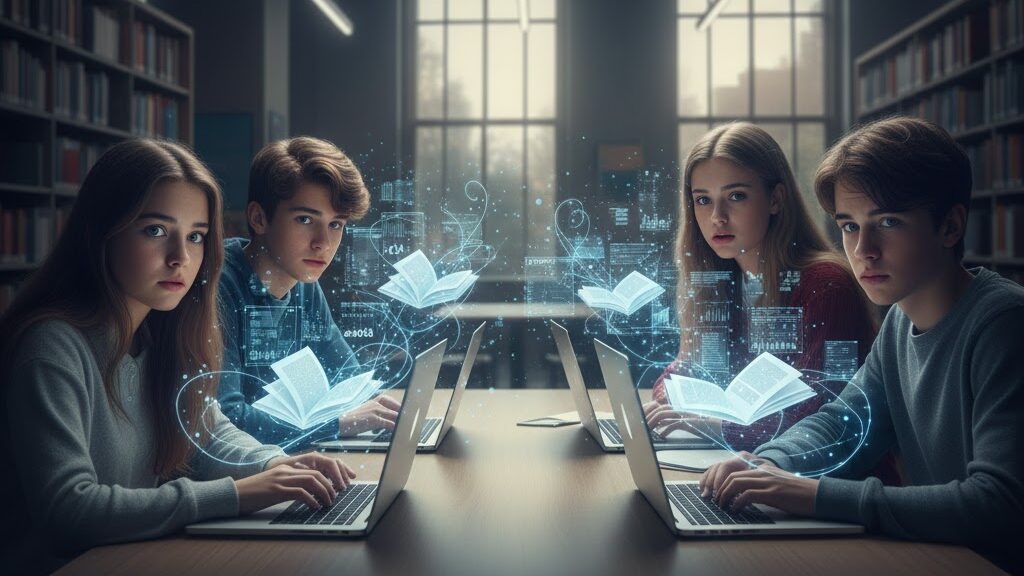
Pupils Fear AI Is Eroding Their Ability to Study, Research Finds


Four serious-looking teenage students (two boys, two girls) are seated across from each other at a long table in a library setting, each with an open laptop in front of them. Glowing, ethereal representations of open books made of data and digital information hover above their laptops, subtly connecting them to the screens. Their expressions convey concern and perhaps a touch of apprehension as they look directly at the viewer. The background features bookshelves, typical of a library or study area. Image (and typos) generated by Nano Banana.
A new study reveals that students are increasingly concerned about how artificial intelligence might be undermining their foundational study and research abilities. Explore the findings that confirm pupils’ fears about AI’s impact on learning. Image (and typos) generated by Nano Banana.

Source

The Guardian

Summary

A study commissioned by Oxford University Press (OUP) reveals that students across the UK increasingly worry that artificial intelligence is weakening their study habits, creativity, and motivation to learn. The report, Teaching the AI Native Generation, found that 98 per cent of pupils aged 13 to 18 use AI for schoolwork, with 80 per cent relying on it regularly. Many described AI as making tasks “too easy” and limiting their independent thinking. While students recognise its usefulness, they also express concern about overreliance and skill erosion. The findings highlight the urgent need for balanced AI education strategies that promote critical thinking, ethical awareness, and human creativity alongside digital competence.

Key Points

  • 98 per cent of UK secondary pupils use AI for schoolwork, most on a regular basis.
  • Many pupils say AI tools make studying too easy and reduce creativity.
  • Concerns are growing about AI’s impact on independent learning and problem-solving.
  • The study urges educators to develop frameworks for responsible, balanced AI use.
  • OUP calls for schools to integrate AI literacy into teaching while safeguarding learning depth.

Keywords

URL

https://www.theguardian.com/technology/2025/oct/15/pupils-fear-ai-eroding-study-ability-research

Summary generated by ChatGPT 5


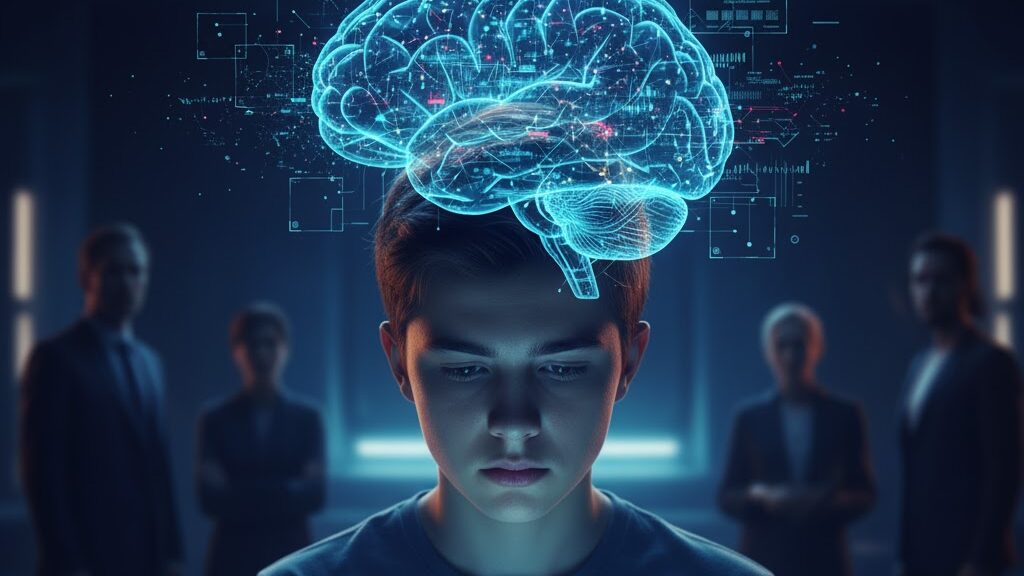
Experts Warn AI Could Reshape Teen Brains


A focused teenage boy looks down at a glowing digital tablet displaying complex data. Above his head, a bright blue, intricate holographic representation of a human brain pulsates with interconnected data points and circuits, symbolizing the impact of technology. In the blurred background, several adult figures in professional attire stand, observing the scene, representing the "experts." Image (and typos) generated by Nano Banana.
As artificial intelligence becomes increasingly integrated into daily life, experts are raising concerns about its potential long-term effects on the developing brains of teenagers. Explore the warnings and discussions surrounding AI’s influence on cognitive development and neural pathways. Image (and typos) generated by Nano Banana.

Source

CNBC

Summary

Ernestine Siu reports growing concern among scientists and regulators that prolonged use of generative AI by children and teenagers could alter brain development and weaken critical thinking skills. A 2025 MIT Media Lab study found that reliance on large language models (LLMs) such as ChatGPT reduced neural connectivity compared with unaided writing tasks, suggesting “cognitive debt” from over-dependence on external support. Researchers warn that early exposure may limit creativity, self-regulation, and critical analysis, while privacy and emotional risks also loom large as children anthropomorphise AI companions. Experts urge limits on generative AI use among young people, stronger parental oversight, and the cultivation of both AI and digital literacy to safeguard cognitive development and wellbeing.

Key Points

  • One in four U.S. teens now use ChatGPT for schoolwork, double the 2023 rate.
  • MIT researchers found reduced brain network activity in users relying on LLMs.
  • Overuse of AI may lead to “cognitive debt” and hinder creativity and ownership of work.
  • Younger users are particularly vulnerable to emotional and privacy risks.
  • Experts recommend age-appropriate AI design, digital literacy training, and parental engagement.

Keywords

URL

https://www.cnbc.com/2025/10/13/experts-warn-ai-llm-chatgpt-gemini-perplexity-claude-grok-copilot-could-reshape-teen-youth-brains.html

Summary generated by ChatGPT 5


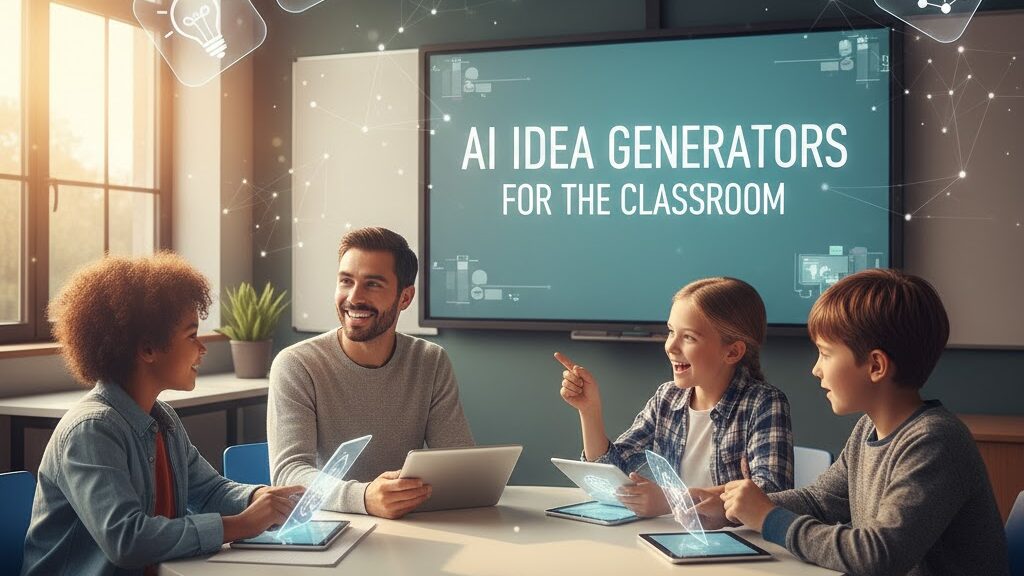
Eight AI Tools That Can Help Generate Ideas for Your Classroom


A diverse group of three elementary school children and one male teacher sitting around a table, actively engaged with tablets. Above them, a network of glowing AI-related icons (like a brain, speech bubble, robot, books, question mark, and a data network) floats, connected by lines, symbolizing idea generation. In the background, a large screen displays "AI IDEA GENERATORS FOR THE CLASSROOM." Image (and typos) generated by Nano Banana.
Spark creativity and innovation in your classroom with the power of artificial intelligence. Discover how AI tools can unlock new ideas and enhance learning experiences for both educators and students. Image (and typos) generated by Nano Banana.

Source

Edutopia

Summary

Alana Winnick outlines eight educator-tested AI tools that can help teachers overcome creative blocks and generate new lesson ideas. Emphasising accessibility, she distinguishes between advanced large language models such as ChatGPT, Gemini, and Claude, and beginner-friendly platforms like Curipod, Brisk, and SchoolAI, which require little technical skill. These tools can draft outlines, design interactive slides, and create tailored quizzes or discussion prompts. Curipod helps build engaging presentations, Brisk turns existing videos or articles into lesson plans, and SchoolAI enables personalised AI tutor spaces for students. Winnick encourages teachers to use AI as a creative partner rather than a replacement for their own professional insight.

Key Points

  • AI tools can boost creativity and save time during lesson planning.
  • Platforms like Curipod, Brisk, and SchoolAI simplify AI use for teachers.
  • ChatGPT, Gemini, and Claude offer greater flexibility for custom prompts.
  • AI can generate lesson outlines, discussion questions, and formative checks.
  • Educators should view AI as a collaborative support, not a substitute for teaching expertise.

Keywords

URL

https://www.edutopia.org/article/using-ai-generate-lesson-ideas/

Summary generated by ChatGPT 5