Generative AI isn’t culturally neutral, research finds


A diverse group of four researchers in a lab setting surrounds a large, glowing, circular holographic projection. The projection shows a series of icons, some representing Western culture (a statue of liberty, a hamburger), and others from different cultures (a statue of a Buddha, a bowl of ramen), with data flow lines moving between them. A central red line cuts through the center of the display, indicating a lack of neutrality. The image visualizes the finding that generative AI is not culturally neutral. Generated by Nano Banana.
As generative AI tools become more integrated into our lives, new research highlights a critical finding: these technologies are not culturally neutral. This image visualizes how AI’s training data can embed cultural biases, underscoring the vital need for diverse representation and ethical oversight in the development of future AI systems. Image (and typos) generated by Nano Banana.

Source

MIT Sloan (Ideas Made to Matter)

Summary

A study led by MIT Sloan’s Jackson Lu and collaborators shows that generative AI models like GPT and Baidu’s ERNIE respond differently depending on the language of the prompt, reflecting cultural leanings embedded in their training data. When asked in English, responses tended toward an independent, analytic orientation; in Chinese, they skewed toward interdependent, holistic thinking. Those differences persist across social and cognitive measures, and even subtle prompt framing (asking the AI “to assume the role of a Chinese person”) can shift outputs. The finding means users and organisations should be aware of—and guard against—hidden cultural bias in AI outputs.

Key Points

  • AI models exhibit consistent cultural orientation shifts depending on prompt language: English prompts lean independent/analytic; Chinese prompts lean interdependent/holistic.
  • These cultural tendencies appear in both social orientation (self vs group) and cognitive style (analysis vs context) tests.
  • The cultural bias is not fixed: prompting the model to “assume the role of a Chinese person” moves responses toward interdependence even in English.
  • Such biases can influence practical outputs (e.g. marketing slogans, policy advice), in ways users may not immediately detect.
  • The study underscores the need for cultural awareness in AI deployment and places responsibility on developers and users to mitigate bias.

Keywords

URL

https://mitsloan.mit.edu/ideas-made-to-matter/generative-ai-isnt-culturally-neutral-research-finds

Summary generated by ChatGPT 5

NSW public school students to get access to state-of-the-art generative AI app


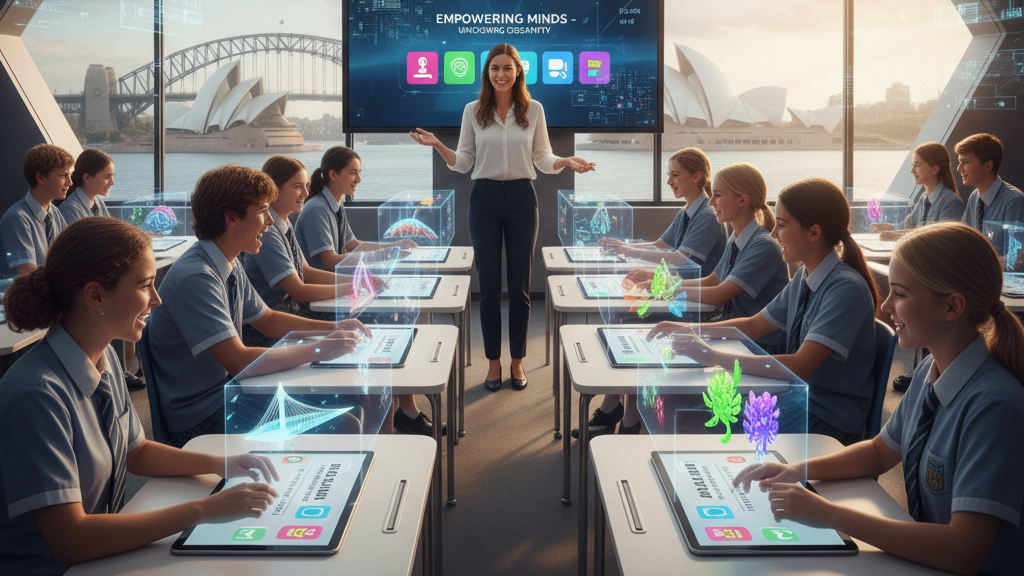
A diverse group of cheerful public school students in a modern classroom is excitedly gathered around a teacher. The teacher holds a large, glowing tablet displaying a generative AI interface with a 'CREATE' icon. In the background, a large screen shows a variety of AI-generated content (images, text, music notes), and the Sydney skyline is visible through a large window. The scene symbolises public school students gaining access to advanced AI technology. Generated by Nano Banana.
In a significant step forward for public education, students in New South Wales are set to gain access to a state-of-the-art generative AI app. This image envisions a future classroom where students and teachers collaborate using powerful AI tools, highlighting a new era of learning and creativity in Australian schools. Image (and typos) generated by Nano Banana.

Source

CyberDaily.au

Summary

The New South Wales government in Australia is rolling out a generative AI app across public schools to support students in areas like writing, problem solving, and research. The aim is to help with learning and reduce educational inequality—particularly for those with fewer resources. Officials emphasise that the app will supplement—not replace—teaching, with controls in place to prevent outright cheating. Teachers will receive training on appropriate use, and the pilot includes oversight and evaluation to monitor impacts, equity, and risk.

Key Points

  • NSW public schools will gain access to a generative AI app intended as a learning support tool, not a replacement for instruction.
  • The rollout aims to reduce disparity: assist students who may lack advanced tutors, help with writing, research, structuring work.
  • Safeguards include teacher training, monitoring, and policies to restrict misuse or overreliance.
  • The government will pilot the programme to evaluate outcomes: learning improvements, equity effects, and unintended harms.
  • The introduction reflects a shift from resisting AI to integrating it thoughtfully at the school level.

Keywords

URL

https://www.cyberdaily.au/government/12672-nsw-public-school-students-to-get-access-to-state-of-the-art-generative-ai-app

Summary generated by ChatGPT 5


AI-Generated “Workslop” Is Destroying Productivity


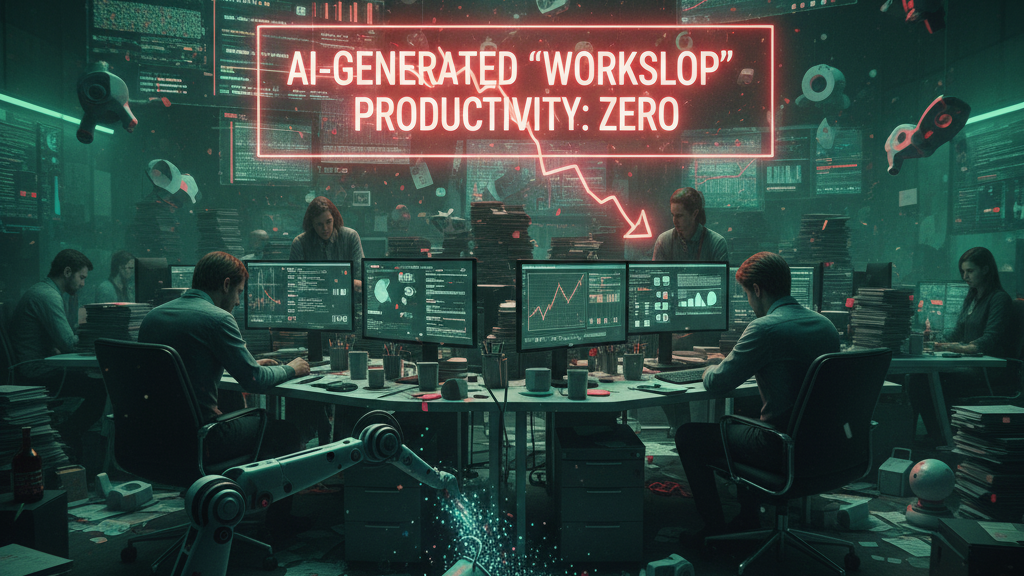
A chaotic office or data center environment filled with people at desks, surrounded by numerous screens displaying complex, overwhelming data and downward-trending graphs. A glowing red holographic display overhead reads 'AI-GENERATED 'WORKSLOP' PRODUCTIVTY: ZERO', with a prominent downward arrow. On the floor, papers are strewn everywhere, and a robotic arm appears to be spilling sparkling digital 'waste.' The scene visually represents how poorly managed AI outputs can destroy productivity. Generated by Nano Banana.
While AI promises efficiency, its unmanaged or poorly implemented output can lead to ‘workslop,’ a deluge of low-quality or irrelevant content that ironically destroys productivity. This image vividly portrays a chaotic scenario where AI-generated clutter overwhelms human workers, underscoring the critical need for careful integration and oversight to truly leverage AI’s benefits without drowning in its drawbacks. Image (and typos) generated by Nano Banana.

Source

Harvard Business Review

Summary

The article introduces “workslop” — AI-generated content (emails, memos, reports) that looks polished but lacks substance — and argues it undermines productivity. As organisations push employees to adopt AI tools, many are producing superficial, low-value outputs that require downstream repair or rewriting by others. The study suggests that while AI adoption has surged, few companies experience measurable productivity gains. The hidden cost of workslop is that the burden shifts to recipients, who must clarify, fix, or discard shallow AI outputs. For AI to add real value, its use must be paired with human review, prompt skill, and metrics focussed on outcomes rather than volume.

Key Points

  • “Workslop” is AI content that appears polished but fails to meaningfully advance a task.
  • Many organisations see limited return on their AI investments: activity without impact.
  • The cost of superficial AI output is borne by others, who must rework or reject it.
  • To counter workslop: review AI outputs, set expectations for quality, teach prompt & editing skills.
  • Value metrics should prioritise outcomes (impact, clarity) over sheer output volume.

Keywords

URL

https://hbr.org/2025/09/ai-generated-workslop-is-destroying-productivity

Summary generated by ChatGPT 5